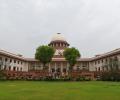
The Supreme Court of India has declined to interfere with the bail granted to 17 members of the Popular Front of India (PFI) in connection with the 2022 murder of Rashtriya Swayamsevak Sangh (RSS) leader Srinivasan in Kerala. The court noted that the Kerala High Court, which granted bail, has the power to revoke it if the conditions are violated. The NIA had sought cancellation of the bail, alleging the accused had violated bail conditions and contacted witnesses. The accused are also facing trial for allegedly instigating communal violence in Kerala and other parts of the country.
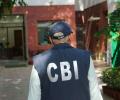
The Central Bureau of Investigation is under the superintendence of the Union government as per the statutory scheme, the Supreme Court held on Wednesday while rejecting the Centre's objection to the maintainability of a lawsuit by West Bengal contesting the federal agency's action of pressing ahead with investigation of cases in the state despite withdrawal of general consent.
The Indian government as respondent in Sanjay Bhandari extradition case has sought permission from the London high court to appeal against the discharge of the defence sector consultant wanted in Delhi to face charges of alleged tax evasion and money laundering.

"Are we not giving a picture that there is no other person and the entire department is full of incompetent people?" a bench headed by Justice B R Gavai told Solicitor General Tushar Mehta.

A bench of Justices B R Gavai and K V Viswanathan clarified that its order will not be applicable to unauthorised structures on public roads, footpaths etc.
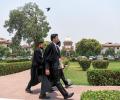
The Supreme Court of India has reserved its interim orders on three key issues related to the Waqf (Amendment) Act, 2025, including the power to denotify waqf properties, the composition of waqf boards, and the provision regarding government land. The court heard arguments from both the petitioners, who challenged the validity of the amended law, and the Centre, which defended the Act as a secular concept. The petitioners sought interim orders to prevent the implementation of certain provisions while the court considers the legal challenges.

Away from the courtroom and legal circles, Nariman was a familiar figure for residents of Hauz Khas who would see him walk regularly, even in the cold winter months of December and January.

Adhikari, leader of the opposition in the West Bengal assembly, denied the charge, saying that he had recently gone to Mehta's residence in Delhi regarding a case related to "post-poll violence" in the state but "could not meet him in person".
The Supreme Court of India will examine the age limits for surrogate mothers and other provisions of the Surrogacy Regulation Act and Assisted Reproductive Technology (Regulation) Act on February 11. The court has asked the government to file its written submissions on the matter. The laws set age limits for intended parents and surrogate mothers, restricting commercial surrogacy and emphasizing altruistic surrogacy. The court is also considering alternative mechanisms for compensating surrogate mothers and has proposed a designated authority for disbursing payments instead of intended couples.
A five-judge Constitution bench headed by Chief Justice D Y Chandrachud told Solicitor General Tushar Mehta, appearing for the Centre, that the nature and tenability of the preliminary objection will depend on the canvass the petitioners open up and the court wants to have a view of their argument.

The Supreme Court of India on Tuesday questioned the issue of using "spyware against terrorists" and stated that any report touching upon the country's "security and sovereignty" won't be made public. The court indicated it might address individual concerns regarding privacy breaches, but the report of the technical committee would not be a document for public discussion. The court will examine the extent to which the report can be shared publicly. The court's statement came during a hearing on a petition related to the alleged use of Pegasus spyware for surveillance. The court also emphasized that "having spyware is not wrong, against whom you are using is the question" and that the security of the nation cannot be compromised. The hearing has been adjourned to July 30.

The Central Bureau of Investigation (CBI) alleged in the Supreme Court on Thursday that there was an attempt to cover up the rape and killing of a post-graduate medic at Kolkata's RG Kar Medical College and Hospital by the local police as the crime scene was altered by the time the federal agency took over the probe.
The Supreme Court on Monday said the pleas challenging the Waqf (Amendment) Act's constitutional validity will now be taken up by a bench headed by Chief Justice of India-designate Justice B R Gavai on May 15 as the incumbent CJI will be demitting office on May 13.

The Supreme Court has granted bail to alleged middleman Christian Michel James in the purported Rs 3,600-crore AgustaWestland case. James had been in custody for six years while the investigation was ongoing. The alleged scam relates to the purchase of 12 VVIP helicopters from AgustaWestland. James, a British national, was extradited from Dubai in December 2018.
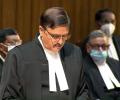
Justice Abhay S Oka, known for his unwavering commitment to liberty and constitutional values, bid farewell to the Supreme Court of India. In his final address, he stressed his dedication to upholding constitutional liberties, emphasizing that it was his "honest endeavor" to fulfill the dream of the Constitution's framers. He also expressed gratitude to the bar and his colleagues for their support and shared heartfelt memories from his time on the bench. Justice Oka's departure marks the end of a distinguished judicial career spanning over two decades, during which he served as a judge of the Bombay High Court, Chief Justice of the Karnataka High Court, and ultimately, as a Supreme Court justice.

Former attorney general of India Goolam Essaji Vahanvati, the first Muslim to become the top law officer of the country, died in Mumbai on Tuesday following a heart attack aged 65.

In his address, CJI Chandrachud recounted his journey, from sitting in the last row of the court as a young law student to his time on the revered corridors of the top court.
The Supreme Court of India has stayed a Lokpal order that allowed complaints to be filed against a sitting high court judge. The court termed the order "something very, very disturbing" and a concern for the independence of the judiciary. The bench issued notices to the Centre, the Lokpal registrar, and the complainant, directing them to keep the identity of the judge confidential. The court will hear the matter again on March 18.
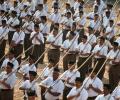
The Calcutta High Court has granted conditional permission to the Rashtriya Swayamsevak Sangh (RSS) to hold a rally in West Bengal's Purba Bardhaman district on February 16, despite objections from the state government. The court allowed the event, which will be addressed by RSS chief Mohan Bhagwat, on the condition that the organizers keep the crowd size and sound levels under control and ensure that students taking secondary exams are not disturbed. The event will be held at the Sports Authority of India (SAI) complex, which is located in a remote area and away from any schools.
A bench of Justices B R Gavai and Augustine George Masih observed it was pained to say that some of the observations made in the high court order depicted total insensitiveness and an inhuman approach.

The Supreme Court of India has directed the governments of Punjab and Haryana to cooperate with the Centre in finding an amicable solution to the long-standing dispute over the Sutlej-Yamuna Link (SYL) canal. The court deemed the de-notification of land acquired for the canal in Punjab an "act of high-handedness" and emphasized the need to consider "wider ramifications" beyond legal considerations. The court has set August 13 for a further hearing if an amicable solution is not reached.
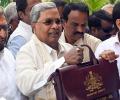
The Karnataka High Court has quashed the Enforcement Directorate's summons to Chief Minister Siddaramaiah's wife Parvathi B M and Urban Development Minister B S Suresh in connection with the MUDA site allotment case. The court ruled that the ED was conducting a parallel investigation despite the case already being probed by the Lokayukta police and a Special Investigation Team (SIT). The ED had alleged that Siddaramaiah and other accused were involved in attempted money laundering in the MUDA site allotment case and that the fourteen sites (plots) allotted to Parvathi in Mysuru upmarket were illegally allotted.

The Supreme Court of India has assured the creation of a robust mechanism to address the alarming number of suicides occurring in Indian Institutes of Technology (IITs) and Indian Institutes of Management (IIMs). The court was informed that 18 suicides had taken place in these institutions over the past 14 months. The court has also directed the University Grants Commission (UGC) to finalize draft regulations aimed at combating caste-based discrimination in educational institutions.

Amid the ongoing debate over the Trinamool Congress seeking removal of Solicitor General of India Tushar Mehta over his alleged meeting with West Bengal Bharatiya Janata Party leader Suvendu Adhikari, TMC state general secretary Kunal Ghosh on Tuesday dropped unannounced at Mehta's residence, but was denied entry.

The Supreme Court of India has agreed to hear on May 6 the pleas of the Kerala government against the governor over the delay in approving bills passed by the state assembly. The court will consider whether the issues raised in the Kerala petition are covered by a recent judgment on a similar plea by Tamil Nadu, which set timelines for governors and the President on granting assent to bills.

Elections in Jammu and Kashmir can be held "anytime from now" as the work on updation of voters list is almost over, the Centre told the Supreme Court on Thursday but remained non-committal about setting a time-frame for restoration of statehood to the Union territory (UT).
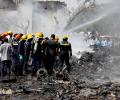
The claims will include three kinds of liabilities: Damage to the aircraft; loss of lives who were aboard the aircraft; including the crew members; and third-party liability because of loss of lives where the aircraft crashed; and cargo liability.
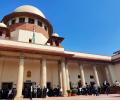
Allowing the Centre's review of the August 23, 2022 verdict, a bench Chief Justice of India DY Chandrachud, Justices PS Narasimha and Manoj Misra recalled the judgement delivered by a three-judge bench headed by former CJI NV Ramana.
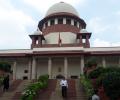
The Enforcement Directorate (ED) faced criticism from the Supreme Court for filing a "half-baked" reply in a bail matter related to the Chhattisgarh liquor scam. The court expressed dissatisfaction with the situation, questioning the accountability of the ED and its advocate-on-record. The ED's additional solicitor general, S.V. Raju, attributed the error to a miscommunication and assured the court that a departmental inquiry would be initiated.

With several state administrations flattening the houses of those involved in criminal cases with bulldozers, the Supreme Court on Monday questioned how can anybody's house be demolished just because he is an accused.
In a viral video of the court proceedings, the judge was seen reprimanding a woman lawyer on Thursday and reportedly made some objectionable comments.
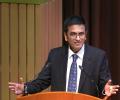
Besides the present CJI Chandrachud, former CJIs Ranjan Gogoi and SA Bobde and former judges Ashok Bhushan and S Abdul Nazeer were part of the bench which had delivered the historic verdict on November 9, 2019.

Nariman received the Padma Bhushan in January 1991 and in 2007, he was awarded the Padma Vibhushan.
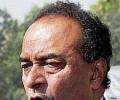
Senior advocate Mukul Rohatgi will be the new Attorney General of India following change in the government at the Centre.
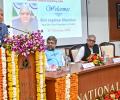
Vice President Jagdeep Dhankhar has questioned the Chief Justice of India's involvement in executive appointments, specifically citing the selection of the CBI director. He believes this practice undermines democratic principles and calls for revisiting the existing norms. Dhankhar also raised concerns about the "doctrine of basic structure", suggesting it has a debatable jurisprudential basis. He emphasized the importance of each institution operating within its constitutional boundaries and highlighted the need for coordinated autonomy. The vice president also discussed the need for a balanced approach to judicial review and the importance of judges focusing on judgments rather than other forms of expression. He stressed the need to revisit the current state of affairs to restore the judiciary's sublimity.

In an interim relief, the Supreme Court on Thursday ordered the status quo and said the Delhi High Court-appointed three-member Committee of Administrators (COA) will not take over the affairs of the Indian Olympic Association.
The Supreme Court has adjourned pleas challenging the appointments of the chief election commissioner (CEC) and election commissioners (ECs) under the 2023 law. The court indicated the matter would be listed after the Holi festival break due to a paucity of time. Petitioners, including the NGO Association for Democratic Reforms, argued for an urgent hearing, emphasizing the importance of the issue and the potential impact on democratic processes. The appointment of the new CEC and ECs under the 2023 law, which excludes the Chief Justice of India from the selection panel, has been a point of contention, with petitioners alleging it undermines the independence of the election commission.

The Supreme Court of India censured the Assam government for keeping persons declared foreigners in detention centers indefinitely and not deporting them. The court questioned the state's explanation for not sending nationality verification forms to the Ministry of External Affairs, stating that detainees should be deported immediately once identified as foreigners. The court directed the Assam government to initiate the deportation process of 63 declared foreign nationals whose nationality was known and file a status report in two weeks. The court also directed the Centre to provide details of those deported and how it plans to deal with detainees whose nationality is unknown.

The Supreme Court of India has ordered a status quo on a private well located near the entrance of the Sambhal Jama Masjid, prohibiting any action regarding the well without its permission. The order came in response to a plea by the mosque's management committee, which challenged a lower court order that allowed a survey of the mosque, citing concerns over violence and loss of life during previous surveys. The court also instructed the authorities to file a status report within two weeks.

As Manipur grapples with protracted ethnic strife, the Supreme Court on Friday asked the Centre and the state government to ensure uninterrupted supply of basic commodities like food and medicines to people facing economic blockade in certain areas of the border state.
